
How to Support Student Mental Health Before a Crisis

The mental health crisis among students continues to escalate, leaving school counselors and educators searching for effective solutions. While Tier 1 support offers universal interventions and Tier 3 provides intensive clinical care, Tier 2 interventions – those designed to help at-risk students before their challenges escalate into crises – are often missing from schools’ mental health systems of supports.
A new survey of 500 K-12 school counselors, conducted by Wakefield Research, confirms this critical gap in student mental health support. The findings are clear: schools need stronger Tier 2 programs to ensure students receive the early, targeted interventions necessary for success.
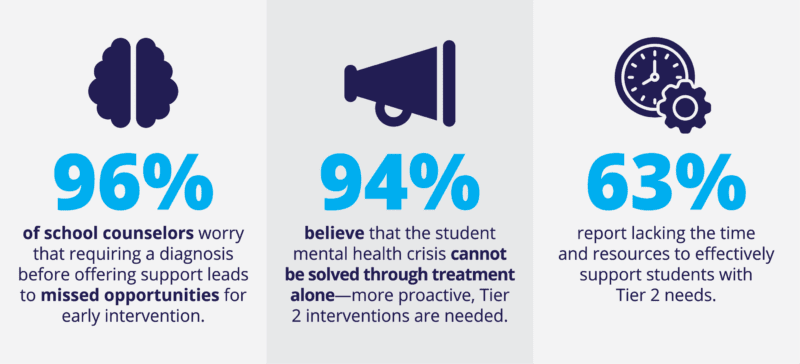
Key Findings: What School Counselors Are Saying
The research confirms what many educators already know: proactive mental health support is essential. Yet, a lack of time, resources, and funding makes it difficult for schools to provide the interventions students need.
Why Tier 2 Support Matters
Tier 2 mental health support plays a vital role in preventing crises and improving student outcomes. When implemented effectively, it can:
- Reduce the need for intensive interventions by addressing issues early.
- Improve student resilience, motivation, and engagement in school.
- Lighten the workload for counselors and educators, allowing them to focus on supporting students before they reach crisis mode.
- Enhance educator well-being, reducing burnout caused by the stress of trying to meet increasing mental health needs.
What Can Schools Do To Enhance Tier 2 Supports:
To close the gap in Tier 2 mental health support, schools can take five actionable steps:
- Prioritize Educator Well-Being – Provide tools and training to support teachers’ mental health.
- Identify At-Risk Students Early – Use data-driven approaches to spot students who need targeted interventions.
- Focus on Tier 2 Interventions – Implement structured programs that teach resilience and coping skills.
- Measure Impact – Track student progress and use evidence-based solutions.
- Advocate for Funding – Work with district leaders to secure funding for Tier 2 programs
Contact us to receive the full research report and receive and actionable strategies to build an effective Tier 2 support system.