Ohio SB 19 Raises the Stakes for Intervention. A Smarter Funding Plan Can Help Districts Control Costs.

Ohio district leaders are already balancing a lot: math, literacy, attendance, intervention, staffing, student support, board expectations, and tight funding decisions.
Now Senate Bill 19 adds a new layer of urgency.
The recently passed law raises expectations around math instruction, academic intervention, teacher preparation, professional development, and curriculum review. For districts, the question is not only what the law requires. The more practical question is how to fund the work in a way that helps students now without creating a larger financial burden later.
That is where the case for investment matters.
SB 19 puts intervention in the spotlight
Under SB 19, Ohio districts will be required to provide evidence-based academic intervention services at no cost to students who score “limited” on state tests in math, English language arts, or both, or who show a comparable level of need on a diagnostic assessment.
According to the Fordham Institute’s summary of the bill, approved intervention options may include high-dosage tutoring, additional instruction time, an extended school calendar, and learning support programs. Districts may provide support directly, through a contracted provider, or through a combination of both.
The scale of need is significant. Fordham’s review of Ohio assessment data noted that the share of students scoring limited in elementary and middle school math ranged from 23 percent in fourth grade to 39 percent in eighth grade. In English language arts, the limited range was just under 17 percent in fifth grade to more than 27 percent in eighth grade.
That means many districts will need to move quickly from identifying students who need help to delivering intervention consistently enough to show progress.
The cost of waiting is real
When students are behind in math or reading, delaying support does not usually save money. It often shifts the cost to a later point, when the need is harder to address.
A student who is one year behind may need targeted support. A student who remains behind for multiple years may need more intensive intervention, more staff time, more scheduling flexibility, and more long-term remediation. The same pattern shows up at the system level. When intervention is inconsistent, districts often spend year after year trying to solve the same problem with short-term fixes.
That is why short-term investment can be a cost-control strategy.
This does not mean every new program will reduce future spend. Districts still need the right model, the right student targeting, the right funding sources, and clear progress monitoring. But investing earlier in evidence-based support can help reduce the need for more intensive and expensive intervention later.
For district leaders, the case is simple: students need support now, and the longer gaps persist, the more costly they become academically, operationally, and financially.
The investment case should be practical
A strong funding case should connect student need, legal requirements, available funds, implementation capacity, and measurable outcomes. It should help district leaders explain why the investment matters now and how it supports longer-term financial responsibility.
That means looking beyond the cost of a single service or program. Districts should consider what they are already spending on intervention, where current efforts are falling short, and which student needs are likely to grow if they are not addressed. They should also look at whether current staffing and scheduling models can support the level of intervention SB 19 requires.
The strongest case for investment is not “we need another initiative.” It is “we need a more consistent, fundable, and measurable way to support students before their needs become more intensive.”
That framing matters when leaders are speaking to boards, cabinet teams, families, and community stakeholders. It keeps the conversation grounded in student need and long-term stewardship.
Funding braiding can help districts avoid one-time fixes
Many districts already have funding sources that may support parts of this work, including Title I, Title II, Title IV, IDEA, state funds, local funds, grants, or other programs depending on the students served and the activities being funded.
The challenge is that funding streams are often planned separately. Academic intervention may sit in one conversation, professional development in another, student support somewhere else, and local funds are used to fill whatever gaps remain.
That can lead to fragmented planning and short-term solutions.
Funding braiding helps districts align allowable funding sources around a clear student need while keeping each funding stream compliant and traceable. One source may support evidence-based intervention for eligible students. Another may support educator capacity. Another may help with implementation needs such as materials, scheduling, family communication, or progress monitoring.
The exact braid will look different in every district. The point is to give each dollar a clear purpose and avoid building a plan that depends on one temporary funding source.
SB 19 will require more than a quick response
SB 19 also creates new planning and visibility expectations. Districts with low third-grade math proficiency will be required to submit math achievement improvement plans that include data analysis, goals, strategies, staffing, professional development, and instructional approaches.
That kind of planning cannot be handled through intervention alone. A district may need student support, instructional materials, educator training, progress monitoring, family communication, and implementation support across schools.
When those pieces are planned separately, costs can rise quickly. When they are planned together, districts have a better chance of reducing duplication, closing service gaps, and making stronger funding decisions.
That is the larger value of building the case for investment early. It gives leaders time to plan the full support model before the need becomes urgent.
How Catapult Learning can help
Ohio districts do not need another disconnected program to manage. They need support that fits within the school day, aligns to district priorities, reduces lift on school teams, and gives leaders data they can use.
Catapult Learning supports districts with high-impact tutoring and targeted intervention in literacy and math, along with implementation support that helps schools turn plans into consistent student support. For districts preparing for SB 19, that support can help leaders think through student need, service delivery, funding alignment, and progress monitoring before implementation pressure increases.
The goal is not to spend more for the sake of compliance. The goal is to invest earlier, fund smarter, and reduce the risk of larger academic and operational costs later.
Ready to build a stronger funding plan?
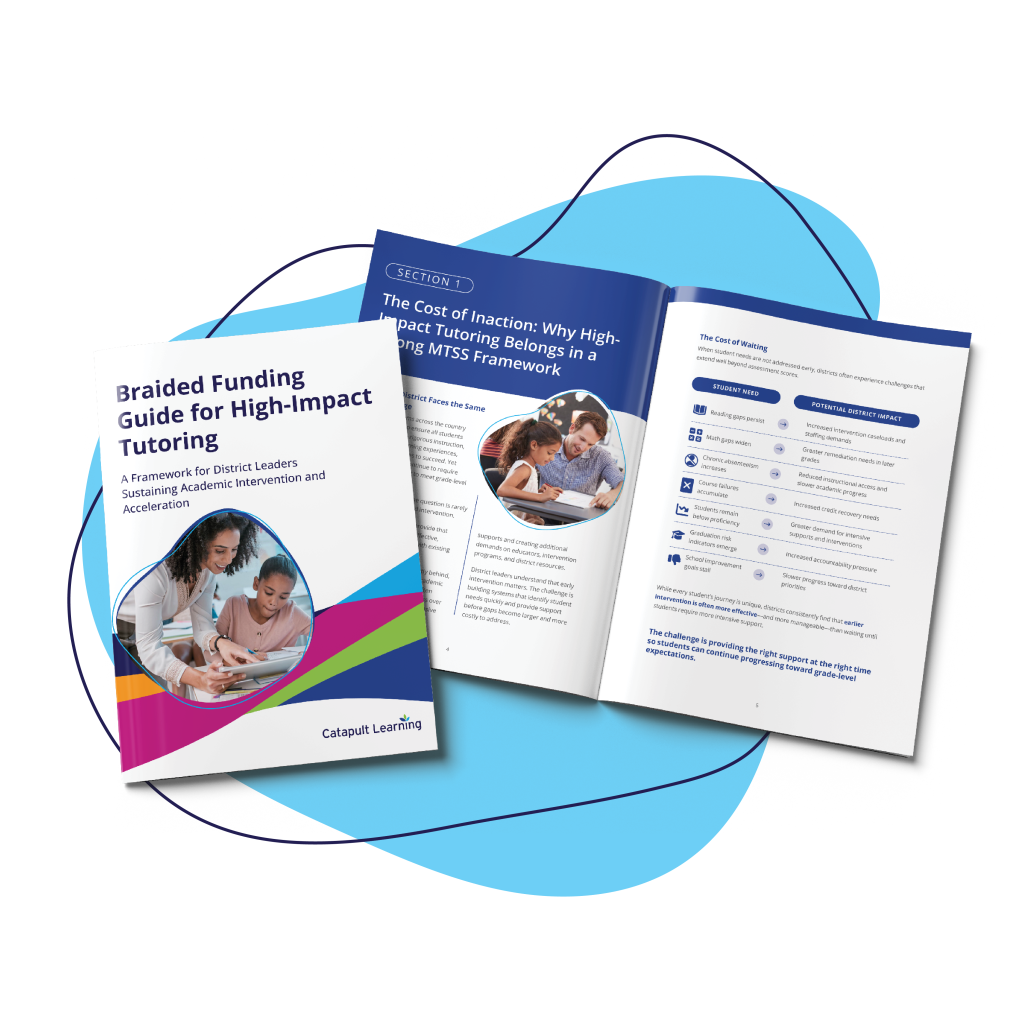
Download our full Funding Braiding Guide to see how districts can align student needs, allowable funding sources, and implementation plans.
Or contact Catapult Learning to talk through funding programs and intervention support for your schools.